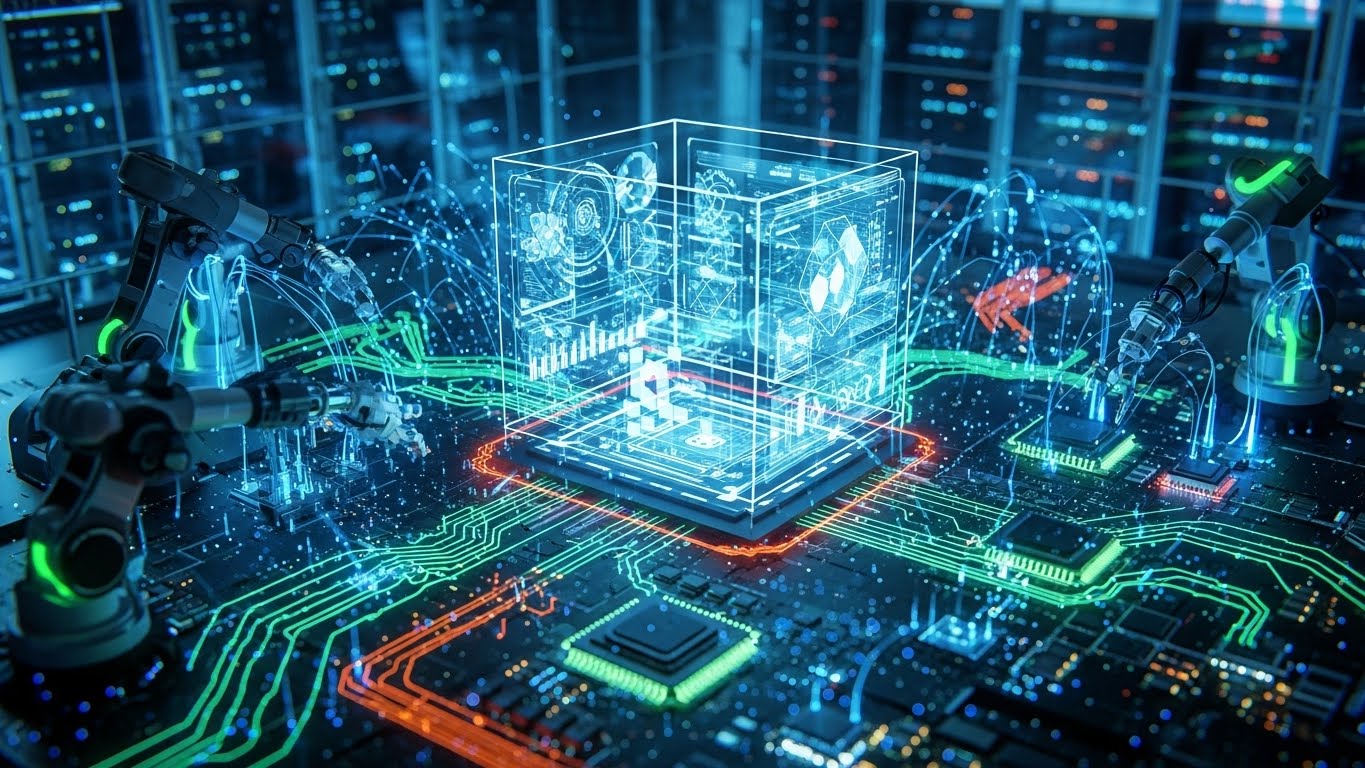

Technology has always been the cornerstone of human progress. From the invention of the wheel to the development of the internet, each technological breakthrough has transformed societies and economies in ways previously unimaginable. Today, we stand on the brink of a new era in which advancements in artificial intelligence, quantum computing, biotechnology, and other emerging fields promise to reshape the way we live, work, and interact. This blog explores some of the most influential technological trends, their potential impacts, and how individuals and businesses can prepare for a rapidly changing digital landscape.
Artificial Intelligence: Beyond Human Imagination
Artificial intelligence has evolved from a niche research field into a mainstream technology driving innovation across industries. AI is no longer limited to simple automation; modern AI systems can learn, reason, and adapt in real-time. Machine learning algorithms analyze massive datasets to detect patterns, predict outcomes, and optimize decision-making processes. AI is already transforming sectors such as healthcare, finance, manufacturing, and retail. In healthcare, AI-powered diagnostic tools can detect diseases earlier than traditional methods, potentially saving millions of lives. In finance, intelligent algorithms optimize investment strategies and detect fraudulent transactions with unprecedented accuracy.
The rise of generative AI is particularly noteworthy. Tools capable of creating text, images, music, and even software code are redefining creativity and productivity. These systems do not merely replicate human output; they augment human capabilities, offering novel solutions and innovative ideas that were previously unattainable. As AI continues to mature, ethical considerations surrounding privacy, bias, and accountability will become increasingly critical. Societies must balance the immense benefits of AI with responsible governance and transparent oversight.
Quantum Computing: Unlocking the Impossible
Quantum computing represents one of the most promising yet challenging technological frontiers. Unlike classical computers, which rely on bits representing either 0 or 1, quantum computers use qubits that can exist in multiple states simultaneously. This property, known as superposition, along with entanglement, allows quantum machines to perform complex calculations exponentially faster than traditional systems. Problems that would take classical computers millennia to solve could be addressed in seconds by a fully functional quantum computer.
Quantum computing has the potential to revolutionize fields such as cryptography, drug discovery, climate modeling, and artificial intelligence. For instance, new quantum algorithms could design molecules for medications more efficiently, drastically reducing research timelines. Cryptography may need to evolve to counteract the unprecedented computational power of quantum machines. While practical, large-scale quantum computing is still in its infancy, investments by governments and private companies are accelerating the race to achieve quantum supremacy. Preparing for this revolution involves not just technological advancements but also new educational programs and workforce training.
Biotechnology: Engineering Life for the Future
Biotechnology is reshaping our understanding of life itself. Advances in genetic engineering, synthetic biology, and personalized medicine are enabling scientists to manipulate DNA, create synthetic organisms, and develop therapies tailored to an individual’s genetic profile. CRISPR technology, in particular, has democratized gene editing, making it faster, cheaper, and more precise than ever before. This opens up possibilities for treating previously incurable diseases, improving agricultural productivity, and even combating climate change through engineered organisms capable of carbon capture.
The ethical implications of biotechnology are profound. Altering human or environmental genetics raises questions about safety, equity, and the potential for unintended consequences. Society must engage in meaningful debates about the boundaries of genetic engineering while ensuring regulations keep pace with rapid scientific advancements. Despite these challenges, biotechnology holds immense promise for improving human health, sustainability, and overall quality of life.
The Internet of Things: A Hyper-Connected World
The Internet of Things (IoT) is turning everyday objects into smart devices capable of communicating and making decisions autonomously. From wearable fitness trackers to smart homes and industrial sensors, IoT devices collect and transmit data that enhances convenience, efficiency, and safety. In industrial settings, predictive maintenance powered by IoT sensors can prevent costly machinery failures, optimize energy consumption, and reduce environmental impact. In urban planning, smart cities leverage IoT to improve traffic flow, monitor air quality, and enhance public services.
However, the proliferation of connected devices also presents challenges. Security vulnerabilities in IoT networks can lead to data breaches and cyberattacks. Ensuring the privacy and safety of users while maintaining seamless connectivity is a complex task that requires robust encryption, continuous monitoring, and responsible data management. The growth of IoT underscores the importance of digital literacy and proactive cybersecurity strategies for individuals, businesses, and governments alike.
Augmented and Virtual Reality: Redefining Experience
Augmented reality (AR) and virtual reality (VR) technologies are transforming how we perceive and interact with the world. AR overlays digital information onto the physical environment, enhancing education, healthcare, and retail experiences. For example, surgeons can visualize a patient’s anatomy during procedures, and students can explore interactive 3D models to deepen their understanding of complex subjects. VR, on the other hand, immerses users in entirely virtual environments, enabling training simulations, virtual travel, and entertainment experiences that were previously impossible.
The convergence of AR, VR, and AI will create even more immersive experiences. Virtual workplaces could become commonplace, allowing employees to collaborate in realistic digital environments regardless of physical location. Retailers may offer fully interactive virtual shopping experiences. While these technologies present exciting opportunities, they also raise questions about social interaction, digital addiction, and the psychological effects of extended virtual immersion. Society must balance the benefits of AR and VR with thoughtful consideration of human well-being.
Blockchain and Decentralization: Trust Without Intermediaries
Blockchain technology is often associated with cryptocurrencies, but its potential extends far beyond digital money. Blockchain enables secure, transparent, and tamper-proof records of transactions, making it valuable for supply chain management, voting systems, digital identity verification, and more. By removing intermediaries, blockchain can reduce costs, increase efficiency, and foster trust in digital ecosystems.
Decentralized finance (DeFi) and non-fungible tokens (NFTs) are examples of blockchain applications that challenge traditional financial and creative industries. DeFi platforms offer peer-to-peer financial services without banks, while NFTs enable unique ownership of digital assets. While the technology is promising, regulatory uncertainty and scalability challenges remain. Understanding blockchain’s core principles and exploring its applications will be crucial for businesses and individuals seeking to leverage its transformative potential.
Sustainable Technology: Innovation Meets Responsibility
As technology advances, sustainability has become a critical consideration. The environmental impact of digital infrastructure, from energy-intensive data centers to electronic waste, cannot be ignored. Emerging technologies are increasingly being designed with sustainability in mind. Renewable energy, energy-efficient computing, and eco-friendly materials are becoming integral to tech development.
Green computing initiatives aim to reduce the carbon footprint of digital services, while innovations in battery technology and energy storage support renewable energy adoption. Companies and consumers are also becoming more conscious of ethical production practices, resource usage, and recycling. Sustainable technology not only protects the planet but also fosters long-term economic resilience and social responsibility.
Preparing for a Technological Future
The rapid pace of technological change presents both opportunities and challenges. For individuals, continuous learning and adaptability are essential to remain relevant in a digitally driven economy. Developing skills in AI, data analysis, cybersecurity, and emerging technologies can open new career paths and entrepreneurial opportunities. For businesses, embracing innovation, investing in research, and fostering a culture of digital literacy are crucial to staying competitive.
Governments and policymakers also play a key role in shaping a responsible technological future. Regulations must balance innovation with ethical considerations, privacy protection, and public safety. Collaboration between the public and private sectors can accelerate responsible innovation while ensuring equitable access to technological benefits.
Conclusion: Embracing the Technological Horizon
Technology is no longer a distant future—it is a defining element of the present and an architect of the future. The convergence of AI, quantum computing, biotechnology, IoT, AR/VR, blockchain, and sustainable technology promises to transform every aspect of human life. Embracing these changes requires foresight, education, ethical reflection, and a willingness to adapt.
The future will not be shaped by technology alone but by how humanity chooses to harness its potential. By fostering innovation, responsibility, and inclusivity, we can ensure that technological progress becomes a force for global good, unlocking possibilities that inspire, empower, and elevate society as a whole. The horizon is vast, and the journey has just begun.