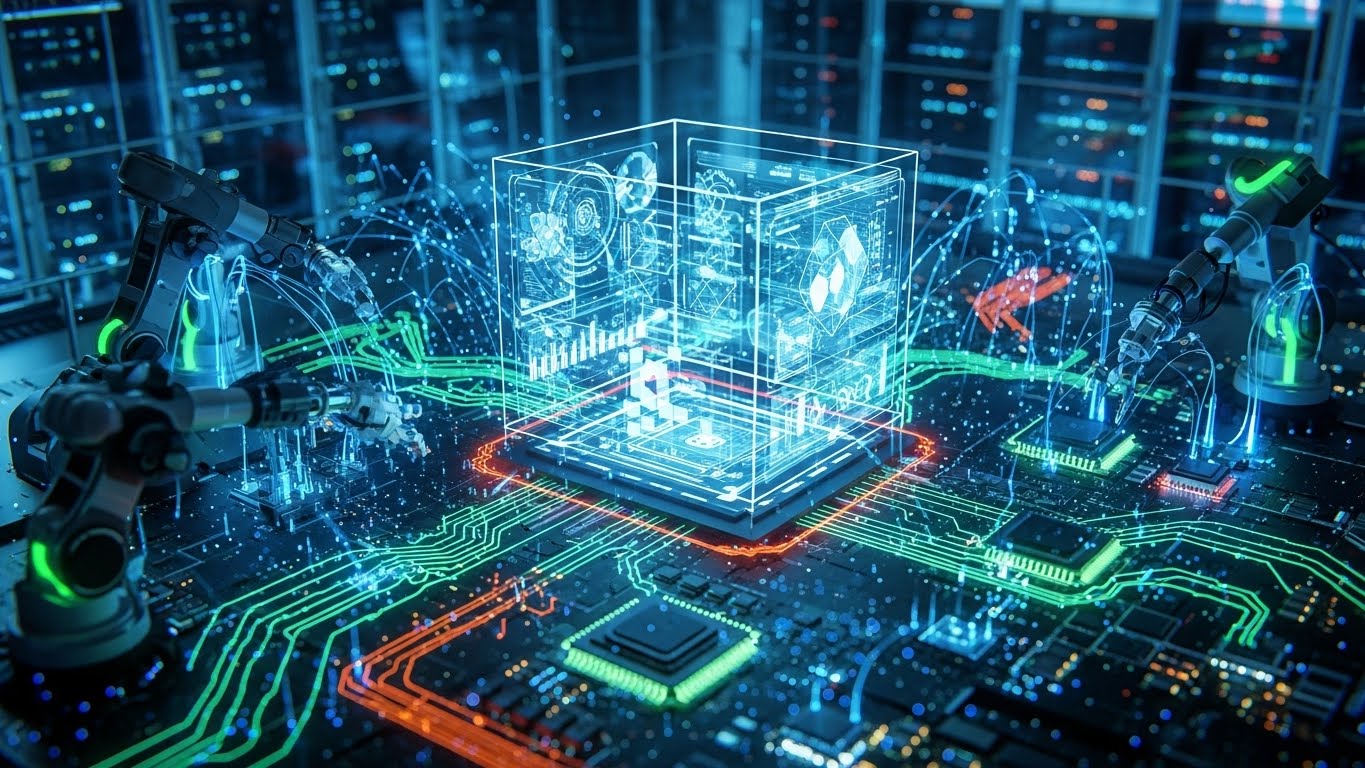
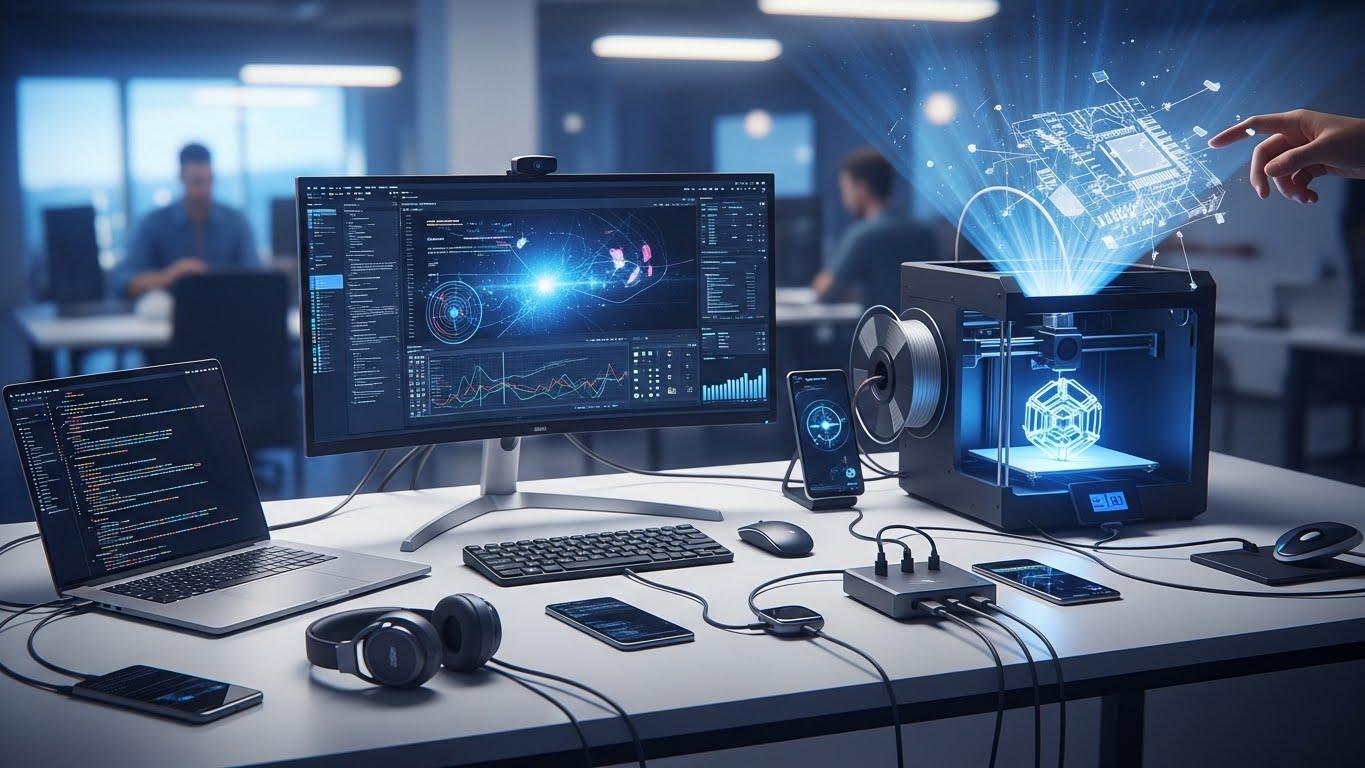
Technology has always been a driving force behind human progress, transforming how we live, work, and interact with the world around us. From the invention of the wheel to the rise of the internet, each major technological breakthrough has opened up new possibilities, challenging the way we think about the world and our place in it. Today, we find ourselves in the midst of another major technological revolution, one that promises to reshape industries, economies, and societies on a scale that we have never seen before. But what exactly does the future of technology hold, and how will it impact our daily lives? In this blog post, we will explore the most exciting and transformative technological trends that are shaping the future and discuss how they will change the world as we know it.
The Rise of Artificial Intelligence and Machine Learning
Artificial Intelligence (AI) and Machine Learning (ML) are perhaps the most talked-about technological innovations of the 21st century. These fields are revolutionizing industries by enabling machines to perform tasks that once required human intelligence, such as decision-making, problem-solving, and pattern recognition. AI is already being used in various applications, from voice assistants like Siri and Alexa to self-driving cars and automated customer service systems.
One of the most exciting developments in AI is the emergence of deep learning, a subset of machine learning that mimics the way the human brain processes information. With deep learning algorithms, machines can learn from vast amounts of data, improving their performance over time without explicit programming. This has led to breakthroughs in areas such as image and speech recognition, natural language processing, and even creative endeavors like music composition and art generation.
In the future, AI and ML are expected to become even more integrated into our daily lives. From personalized recommendations on streaming platforms to autonomous robots in healthcare and manufacturing, AI is set to transform a wide range of industries. However, there are also ethical concerns surrounding AI, particularly with regard to job displacement, privacy, and bias. As AI continues to advance, it will be crucial for governments, businesses, and individuals to address these challenges and ensure that the benefits of AI are distributed fairly across society.
The Internet of Things: A More Connected World
The Internet of Things (IoT) refers to the growing network of physical devices—ranging from household appliances to wearable gadgets—that are connected to the internet and can communicate with each other. IoT has already begun to transform how we interact with the world, making everyday objects smarter and more efficient. For example, smart thermostats can learn your preferences and adjust the temperature in your home automatically, while wearable fitness trackers can monitor your health and provide insights to help you live a healthier lifestyle.
As IoT devices become more prevalent, the possibilities for innovation are endless. In the healthcare sector, IoT could lead to the development of remote monitoring tools that allow doctors to track patients’ vital signs in real-time, improving patient care and reducing hospital readmission rates. In the home, IoT devices could help conserve energy, monitor security, and even manage household tasks like grocery shopping and cooking.
However, the rise of IoT also raises important concerns about privacy and security. With so many devices collecting data about our personal lives, the risk of cyberattacks and data breaches becomes more significant. In the future, it will be crucial to develop robust security measures and protocols to protect users’ data and ensure that IoT devices are used responsibly.
The Impact of 5G Technology on Communication and Connectivity
5G, the fifth generation of mobile network technology, promises to revolutionize how we connect and communicate with the world. With its ultra-fast speeds, low latency, and ability to support a massive number of connected devices, 5G will enable a range of new technologies and services that were previously not possible.
For instance, 5G will make autonomous vehicles more viable by enabling real-time communication between vehicles, infrastructure, and pedestrians. In healthcare, 5G could support the widespread adoption of telemedicine, allowing doctors to conduct virtual consultations with patients without delays or interruptions. In entertainment, 5G will provide the bandwidth necessary to stream ultra-high-definition video and enable immersive experiences like virtual reality and augmented reality.
The widespread rollout of 5G is expected to have a profound impact on industries ranging from manufacturing to agriculture, by enabling smarter cities and more efficient supply chains. However, the adoption of 5G is not without challenges. The infrastructure required to support 5G networks is expensive and requires significant investment. Additionally, there are concerns about the potential health effects of 5G radiation, although current research suggests that 5G technology is safe.
Blockchain and the Future of Data Security
Blockchain technology is often associated with cryptocurrencies like Bitcoin, but its potential extends far beyond digital currencies. At its core, blockchain is a decentralized and transparent system that allows data to be securely stored and verified without the need for a central authority. This makes it an ideal technology for applications that require high levels of security and trust.
In the future, blockchain could revolutionize industries such as finance, healthcare, and supply chain management by providing a more secure and efficient way to store and transfer data. For example, blockchain could be used to streamline financial transactions, reducing the need for intermediaries and lowering transaction fees. In healthcare, blockchain could allow patients to have greater control over their medical records, ensuring that their data is accurate, secure, and accessible only to authorized parties.
One of the most promising applications of blockchain is in the area of digital identity management. With blockchain, individuals could have more control over their personal data and how it is used, reducing the risk of identity theft and data breaches. As blockchain technology continues to mature, it is likely that we will see more widespread adoption across various sectors, providing greater security, transparency, and efficiency.
The Evolution of Augmented and Virtual Reality
Augmented Reality (AR) and Virtual Reality (VR) are technologies that are rapidly gaining traction in industries such as entertainment, education, and healthcare. While both technologies offer immersive experiences, they differ in how they interact with the real world. AR overlays digital content onto the physical world, enhancing our perception of reality, while VR creates a completely virtual environment that immerses users in a digital world.
In the entertainment industry, AR and VR are transforming how we experience media. Video games, movies, and live events are becoming more interactive and engaging, with AR and VR allowing users to step into the action in ways that were previously unimaginable. In education, VR is being used to create virtual classrooms and simulations that allow students to experience history, science, and other subjects in a hands-on way.
In healthcare, VR is being used for pain management, rehabilitation, and even surgical training. AR is helping doctors and surgeons visualize complex medical data in real-time, improving the accuracy of diagnoses and procedures. As the technology continues to improve, we can expect to see even more groundbreaking applications of AR and VR in various fields.
The Growth of Quantum Computing
Quantum computing is a cutting-edge field that holds the potential to revolutionize computing by harnessing the strange and powerful principles of quantum mechanics. Unlike traditional computers, which process information in binary form (0s and 1s), quantum computers use quantum bits, or qubits, which can exist in multiple states at once. This allows quantum computers to process vast amounts of data simultaneously, making them exponentially more powerful than classical computers for certain types of problems.
While quantum computing is still in its infancy, it has the potential to solve complex problems that are currently beyond the reach of classical computers. In fields like drug discovery, climate modeling, and cryptography, quantum computing could lead to breakthroughs that improve our understanding of the world and accelerate technological progress. However, there are still significant challenges to overcome, such as developing stable qubits and scaling quantum computers to solve practical problems.
As research in quantum computing continues to advance, it is likely that we will see new innovations and applications emerge, particularly in areas that require massive computational power. The full potential of quantum computing may still be years away, but it is undoubtedly one of the most exciting areas of technological development.
Conclusion: Embracing the Technological Future
The future of technology is both exciting and challenging. From artificial intelligence and machine learning to quantum computing and blockchain, the innovations that are shaping our world have the potential to transform industries, improve our quality of life, and solve some of the world’s most pressing problems. However, these advancements also bring with them new ethical, social, and security challenges that we must address in order to ensure that technology benefits everyone.
As we continue to embrace the technological future, it is important to remember that technology is a tool, not an end in itself. The choices we make today will determine how technology is used and how it shapes our society in the years to come. By staying informed, fostering innovation, and addressing the challenges that arise, we can create a future where technology works for the greater good of humanity.