
Introduction
Technology has become the heartbeat of the modern world. It touches every aspect of human life—communication, education, business, medicine, entertainment, and even our thoughts about the future. From the early days of stone tools to the age of artificial intelligence and quantum computing, technology has always been humanity’s greatest force for progress. Today, the pace of innovation is faster than ever, and it is changing how we live, work, and think. The twenty-first century stands as a testament to the immense power of technological evolution.
This blog explores the vast world of technology, its evolution, its impact on society, and what the future might hold. It takes a deep look into how technology continues to redefine boundaries, offering opportunities while also posing significant challenges.
The Historical Roots of Technology
The story of technology begins thousands of years ago. Humanity’s earliest innovations were simple yet revolutionary—stone tools, fire, and the wheel. These primitive technologies marked the foundation of human advancement. With the invention of agriculture, humans shifted from nomadic lifestyles to settled societies. This agricultural revolution introduced tools like the plow and irrigation systems that enhanced productivity and shaped civilization.
The next great leap came during the Industrial Revolution. Steam engines, textile machines, and mechanized production transformed industries and societies. This period saw rapid urbanization and gave birth to new economic systems. Factories replaced workshops, and railways connected cities. For the first time, humans experienced large-scale technological transformation that affected every aspect of life.
The twentieth century brought the digital revolution. Computers, the internet, and telecommunications changed how humans interacted. This era created the foundation for the interconnected, information-driven society we live in today.
The Digital Revolution and the Rise of the Internet
The birth of the internet was one of humanity’s most transformative inventions. What started as a network for sharing data among researchers quickly became a global system connecting billions. The digital revolution introduced personal computers, email, social media, and smartphones, all of which redefined communication and information sharing.
The internet gave rise to the information age. Knowledge became accessible to anyone, anywhere. Businesses shifted online, education moved to virtual platforms, and entertainment became digital. The power of connectivity reshaped how societies functioned. Individuals no longer needed to rely solely on traditional media or physical spaces to communicate or work.
This revolution also marked the beginning of a new economic system. E-commerce emerged, digital marketing evolved, and data became the new currency. Every click, every search, and every interaction contributed to a massive pool of information that companies began using to understand and influence consumer behavior.
The Smartphone Era and the Power of Mobility
The introduction of smartphones marked another technological milestone. These compact devices combined the power of communication, computing, and entertainment in the palm of one’s hand. With mobile internet, people could access information, conduct business, and connect with others instantly.
Smartphones have transformed nearly every aspect of human life. They are our cameras, notebooks, GPS systems, and entertainment centers. Mobile applications have replaced physical tools and services—from banking to fitness tracking. The smartphone revolution also created new industries, including mobile gaming, app development, and digital payments.
However, the smartphone era has also introduced new challenges. Issues like digital addiction, privacy concerns, and overreliance on technology have emerged. The constant flow of notifications and information can overwhelm the human mind. Finding balance in a hyperconnected world has become a new form of digital wisdom.
Artificial Intelligence: The New Frontier
Artificial intelligence (AI) stands as one of the most powerful and transformative technologies of our time. Once a distant dream, AI is now embedded in daily life. From virtual assistants to recommendation algorithms, AI influences our decisions and simplifies our tasks.
AI’s ability to analyze massive amounts of data enables it to learn patterns, make predictions, and even simulate human-like reasoning. Industries such as healthcare, finance, and logistics are using AI to improve efficiency, accuracy, and innovation. For example, AI-powered diagnostics can detect diseases earlier, and predictive algorithms can forecast market trends.
Machine learning and deep learning have pushed the boundaries further, allowing AI to process unstructured data such as images, audio, and text. The rise of generative AI, capable of creating realistic images, text, and videos, represents a turning point in creativity and automation.
Despite its promise, AI also raises ethical questions. How should societies regulate algorithms that can make life-changing decisions? How can we ensure AI systems are unbiased and transparent? The future of AI will depend on how humans balance innovation with responsibility.
Automation and the Future of Work
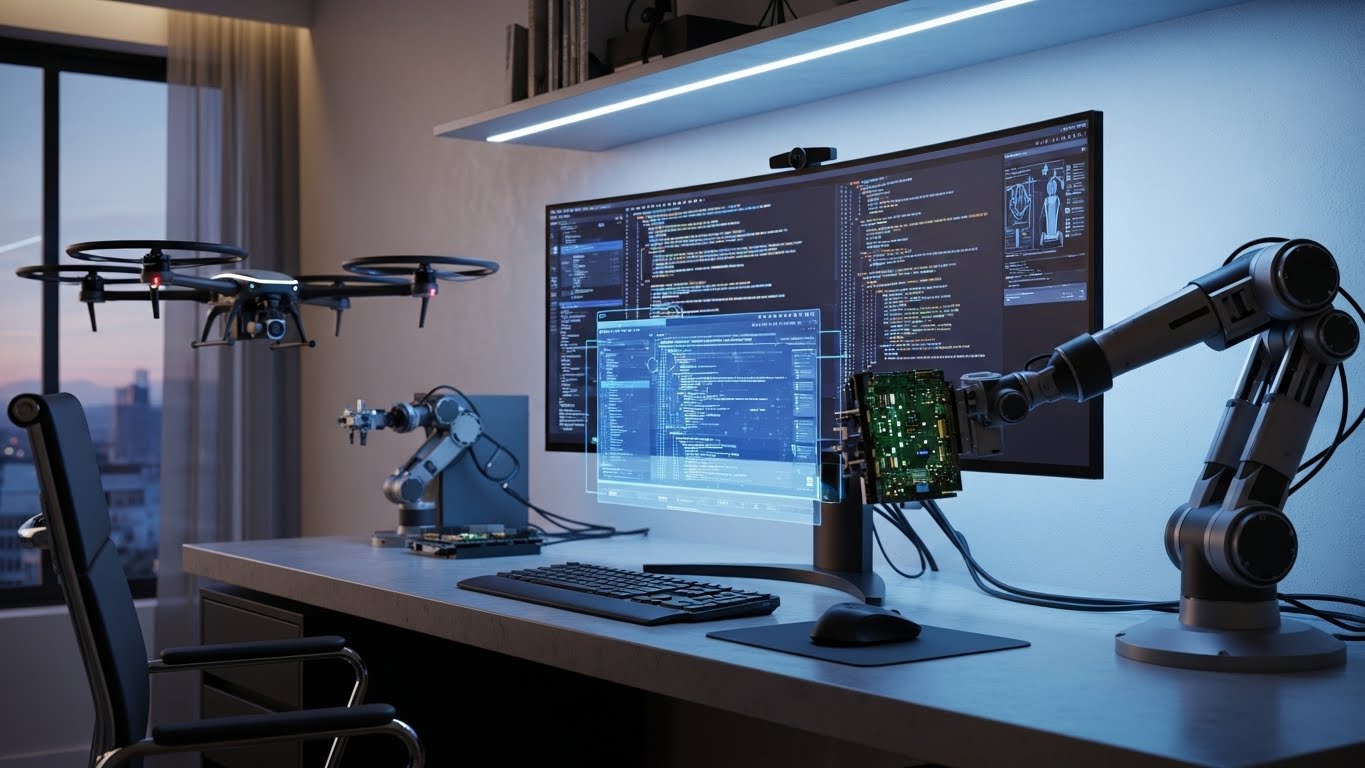
Automation is transforming industries worldwide. Robots and intelligent systems are taking over repetitive and dangerous tasks, improving productivity and safety. In manufacturing, automation has reduced errors and increased efficiency. In logistics, drones and automated vehicles are streamlining deliveries.
While automation offers benefits, it also poses a challenge to employment. Many traditional jobs are being replaced by machines and algorithms. However, history shows that technological revolutions often create new roles as they eliminate old ones. The key lies in reskilling and adapting the workforce to new demands.
The concept of work itself is evolving. Remote work, gig economies, and digital collaboration tools have changed how people approach employment. Technology has blurred geographical boundaries, allowing professionals to work from anywhere. This flexibility brings both freedom and new pressures, as the line between personal and professional life becomes increasingly thin.
The Role of Cloud Computing and Big Data
Cloud computing revolutionized how data is stored and processed. Instead of relying on local hardware, individuals and organizations can now access computing power and storage remotely. This innovation democratized access to powerful technologies and reduced infrastructure costs.
Big Data refers to the vast amount of information generated every second by users, sensors, and systems. Analyzing this data provides valuable insights into consumer behavior, public health, and even climate patterns. Governments and businesses use data analytics to make informed decisions and optimize processes.
However, the rise of data has also led to privacy concerns. As more personal information moves online, safeguarding digital identities has become essential. Cybersecurity now stands as a crucial pillar of technological progress.
The Internet of Things: A Connected World
The Internet of Things (IoT) represents the next step in technological evolution. It connects everyday devices—home appliances, vehicles, and industrial machines—to the internet. These connected devices communicate, collect data, and operate autonomously, creating smart environments.
Smart homes allow users to control lighting, temperature, and security through voice or mobile commands. Smart cities use sensors to manage traffic, waste, and energy efficiently. In healthcare, IoT devices monitor patients remotely, improving diagnosis and care.
The power of IoT lies in integration. When combined with AI and Big Data, it creates intelligent systems capable of self-optimization. Yet, with this connectivity comes risk. Each connected device can be a potential entry point for cyberattacks, making digital security more critical than ever.
Quantum Computing: The Next Technological Revolution
Quantum computing promises to redefine the limits of computation. Traditional computers process information in bits—zeros and ones—while quantum computers use qubits, which can exist in multiple states simultaneously. This allows them to solve complex problems much faster than classical machines.
Quantum technology could revolutionize industries like cryptography, materials science, and medicine. It could enable the creation of new drugs, optimize global logistics, and model complex systems like weather or financial markets with unprecedented accuracy.
Although still in its infancy, quantum computing represents a leap toward a new digital age. Its development will likely determine the next phase of technological dominance.
The Ethical and Environmental Impact of Technology
With great power comes great responsibility. The rapid growth of technology has sparked debates about ethics, privacy, and sustainability. The extraction of minerals for electronic devices affects ecosystems. The growing demand for energy in data centers contributes to carbon emissions. E-waste is becoming one of the fastest-growing environmental problems.
Technological ethics extend beyond the environment. The digital divide—unequal access to technology—creates inequality. Wealthier nations and individuals enjoy the benefits of innovation, while poorer regions struggle to keep up. This imbalance can widen social and economic gaps.
Another concern is data privacy. In the digital age, personal data has become a commodity. Governments and corporations collect massive amounts of information, often without explicit consent. Striking a balance between convenience and privacy has become one of the defining challenges of modern society.
The Role of Technology in Education and Healthcare
Technology has transformed education and healthcare, two of the most vital human sectors. Online learning platforms allow students to access global knowledge regardless of location. Virtual classrooms, simulations, and AI tutors personalize education for every learner.
In healthcare, technology is saving lives every day. From robotic surgeries to telemedicine, innovations are improving access and outcomes. Wearable devices track vital signs, while AI assists doctors in diagnosis. Data-driven healthcare promises early detection of diseases and more precise treatments.
However, reliance on technology in these sectors must be balanced with human judgment and empathy. Education requires mentorship and interaction, and healthcare demands compassion. Technology should enhance—not replace—these human elements.
Cybersecurity in a Digital World
As the world becomes more connected, cybersecurity becomes more crucial. Cyberattacks can disrupt economies, steal data, and even endanger lives. From identity theft to ransomware, digital threats are constantly evolving.
Organizations are investing heavily in cybersecurity infrastructure and training. Encryption, multi-factor authentication, and AI-powered threat detection are now standard practices. Yet, individuals also bear responsibility for their digital safety. Simple actions like strong passwords and awareness can prevent many cyber risks.
The future of cybersecurity will likely involve collaboration between humans and AI. Intelligent systems can detect and neutralize threats faster than any human team, creating a digital shield for the modern world.
The Future of Human and Machine Integration
The line between humans and machines is gradually blurring. Technologies like augmented reality, virtual reality, and brain-computer interfaces are merging physical and digital experiences. These innovations are transforming entertainment, education, and even medicine.
In the future, humans might interact with technology through thought alone. Neural implants could enhance memory, restore mobility, and even connect minds directly. While this may sound like science fiction, research is advancing rapidly.
However, human-machine integration raises philosophical questions. What does it mean to be human in a world where machines can think, feel, and act? How do we preserve identity, morality, and emotion in an increasingly digital existence? These are questions that future generations must answer carefully.
Conclusion: The Unstoppable Journey of Innovation
Technology is not just a tool—it is a reflection of human ambition. It evolves as we do, shaped by our creativity, curiosity, and need to improve life. From fire to artificial intelligence, each innovation tells a story of progress and challenge.
As we move deeper into the digital age, the choices we make will determine the future of humanity. Whether technology becomes a force for unity or division, sustainability or destruction, depends on our vision and values.
The future belongs to those who understand that technology is not merely about machines but about people. It is about using knowledge, ethics, and imagination to create a world that is smarter, fairer, and more connected than ever before.
In this ever-evolving technological landscape, one truth remains constant—innovation never stops. It continues to push boundaries, inspire minds, and shape the destiny of our civilization. The story of technology is, and always will be, the story of humanity itself.