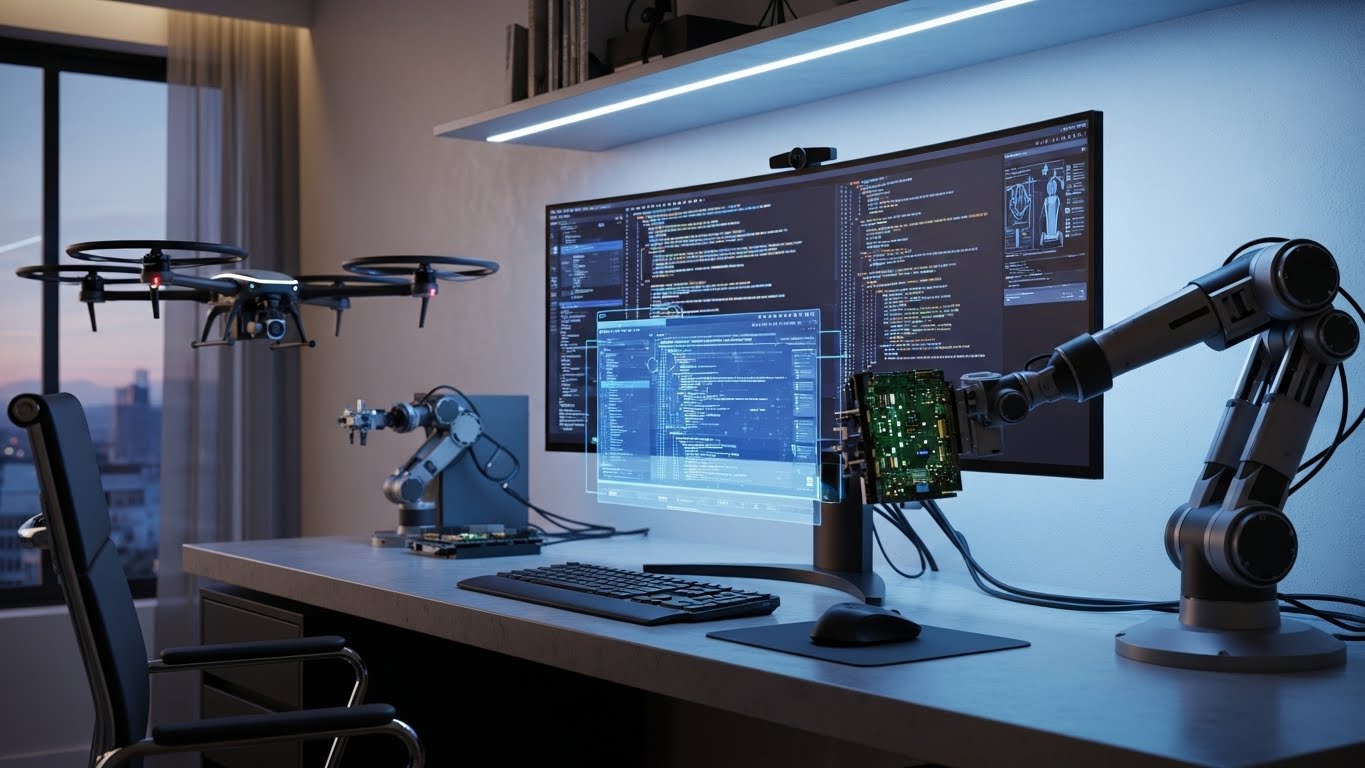
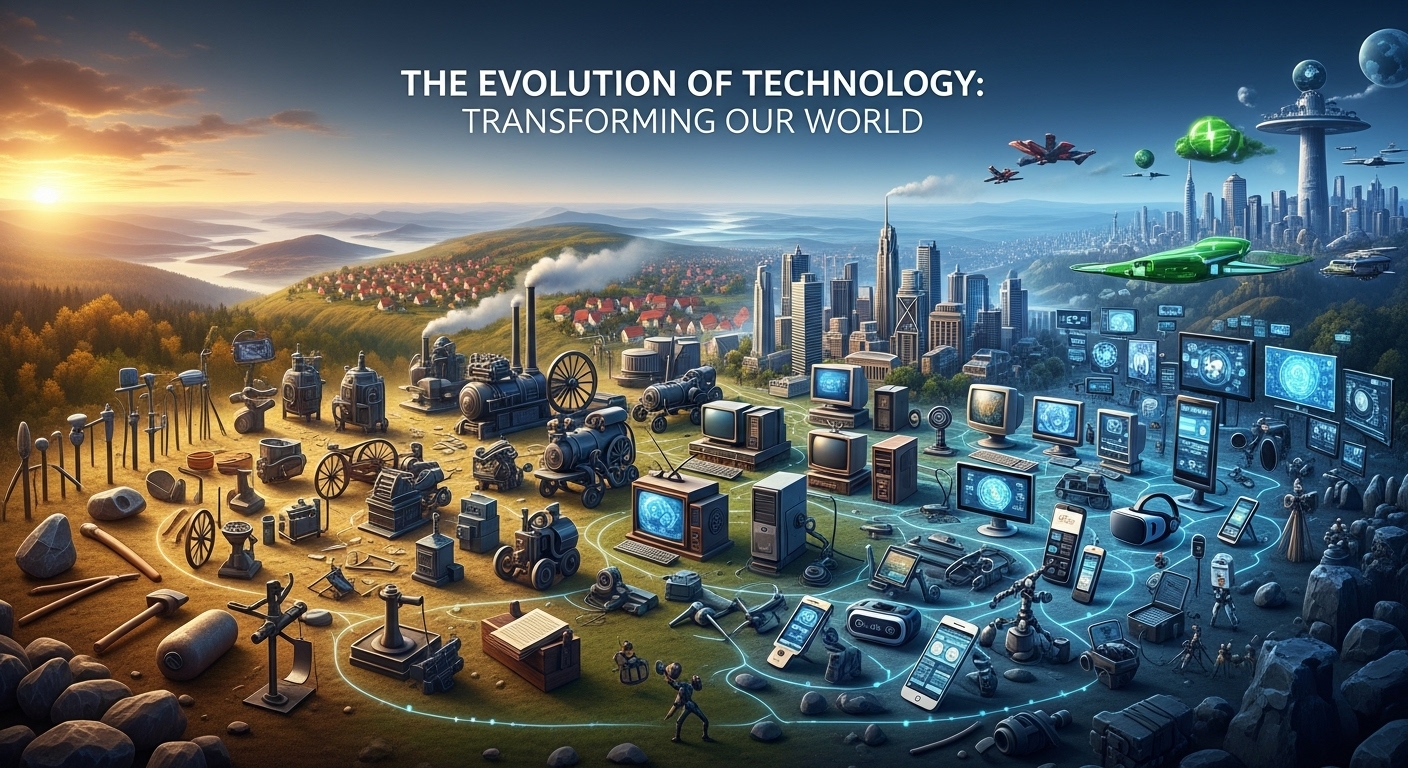
Technology has been an integral part of human civilization, evolving from primitive tools to the highly sophisticated devices we rely on today. Its impact is ubiquitous, shaping the way we communicate, work, learn, and even think. From artificial intelligence to quantum computing, the pace of technological advancement continues to accelerate, offering immense opportunities and posing new challenges. In this blog, we will explore various facets of modern technology, its applications, trends, and how it is reshaping industries and society.
The Evolution of Technology
The story of technology is a tale of human ingenuity and adaptation. Early humans developed tools from stone and wood, laying the foundation for future innovations. Over centuries, civilizations witnessed remarkable advancements such as the wheel, the printing press, and the steam engine, each revolutionizing daily life and society.
The 20th century marked a significant turning point, with the invention of the telephone, electricity, and computers. The digital revolution brought about the internet, smartphones, and global connectivity, making information accessible like never before. Today, we live in an era dominated by smart devices, cloud computing, and data-driven technologies, reflecting an unprecedented level of integration between humans and machines.
Artificial Intelligence: Redefining Intelligence
Artificial Intelligence (AI) is perhaps one of the most transformative technologies of the modern era. At its core, AI enables machines to mimic human cognitive functions such as learning, problem-solving, and decision-making. AI systems are being deployed in numerous sectors, including healthcare, finance, automotive, and entertainment.
In healthcare, AI algorithms can analyze medical images, detect diseases early, and assist in developing personalized treatment plans. In finance, AI-driven systems monitor fraud, predict market trends, and automate trading strategies. Even everyday applications, like virtual assistants and recommendation systems, rely heavily on AI to enhance user experiences.
The rise of AI also raises important ethical and societal questions. Concerns about data privacy, job displacement, and decision-making transparency highlight the need for responsible AI deployment. Despite these challenges, AI remains a cornerstone of technological advancement, offering solutions that were unimaginable just a decade ago.
Internet of Things (IoT): Connecting the World
The Internet of Things (IoT) refers to the network of physical devices connected to the internet, collecting and exchanging data. From smart homes to industrial automation, IoT is transforming how we interact with the physical world.
Smart homes equipped with IoT devices allow users to control lighting, heating, and security systems remotely. In agriculture, IoT sensors monitor soil conditions and crop health, enabling precision farming and resource optimization. Industries utilize IoT for predictive maintenance, reducing downtime and operational costs.
The proliferation of connected devices has created a massive amount of data, which in turn fuels advancements in AI and machine learning. However, IoT also introduces challenges related to cybersecurity and data management. Ensuring secure communication between devices and protecting sensitive information remain critical priorities.
Cloud Computing: Powering the Digital Age
Cloud computing has revolutionized how businesses and individuals access computing resources. By delivering services over the internet, cloud platforms allow users to store, process, and analyze data without investing in physical infrastructure.
Enterprises leverage cloud computing for scalability, cost efficiency, and collaboration. Cloud services support everything from email and document management to complex analytics and artificial intelligence workloads. Small businesses benefit from access to enterprise-grade technology without the burden of maintenance and hardware costs.
Moreover, cloud computing plays a pivotal role in enabling remote work, which has become increasingly common. Employees can access work tools, files, and applications from anywhere in the world, fostering flexibility and productivity. As cloud technology evolves, innovations such as serverless computing and edge cloud are further expanding its capabilities.
Cybersecurity: Protecting the Digital Frontier
As technology becomes more pervasive, cybersecurity has emerged as a critical concern. Cyberattacks, data breaches, and identity theft are increasingly common, posing risks to individuals, organizations, and even national security.
Modern cybersecurity involves a combination of hardware, software, and best practices designed to protect digital assets. Encryption, firewalls, multi-factor authentication, and intrusion detection systems are just a few of the measures employed to safeguard sensitive information. Additionally, artificial intelligence is being used to identify threats in real time and predict potential vulnerabilities.
The human element remains equally important in cybersecurity. Educating users about safe online behavior, implementing robust access controls, and maintaining up-to-date software are essential practices in mitigating cyber risks.
Blockchain: Decentralizing Trust
Blockchain technology, initially popularized by cryptocurrencies, has far-reaching implications beyond digital currencies. A blockchain is a decentralized ledger that records transactions across multiple computers, ensuring transparency and immutability.
This technology is finding applications in supply chain management, healthcare, finance, and voting systems. For example, blockchain can track the provenance of goods, preventing counterfeiting and ensuring authenticity. In healthcare, patient records stored on blockchain can enhance data integrity and interoperability.
The decentralized nature of blockchain reduces reliance on intermediaries, creating a trustless environment where transactions can be verified independently. As the technology matures, it has the potential to disrupt traditional business models and reshape how we exchange value.
Quantum Computing: Unlocking Unprecedented Potential
Quantum computing represents the next frontier in computational power. Unlike classical computers that use bits to represent information as 0 or 1, quantum computers use qubits, which can exist in multiple states simultaneously. This allows quantum systems to perform complex calculations at speeds unattainable by conventional computers.
Quantum computing has the potential to revolutionize fields such as cryptography, drug discovery, optimization, and artificial intelligence. Problems that would take classical computers thousands of years to solve could be tackled in seconds by quantum machines.
Despite its promise, quantum computing faces significant technical challenges, including qubit stability, error correction, and scalability. Researchers around the world are actively working to overcome these obstacles, paving the way for practical quantum applications in the near future.
Augmented and Virtual Reality: Redefining Experiences
Augmented Reality (AR) and Virtual Reality (VR) are reshaping how we experience digital content. AR overlays digital information onto the real world, while VR immerses users in a completely virtual environment. These technologies are transforming entertainment, education, healthcare, and retail.
In gaming, AR and VR offer immersive experiences that blur the line between the virtual and physical worlds. In education, virtual simulations provide hands-on learning experiences that are both engaging and effective. Healthcare professionals use AR for surgical planning and VR for pain management and rehabilitation. Retailers leverage AR to allow customers to visualize products before making a purchase, enhancing the shopping experience.
As hardware becomes more affordable and software more sophisticated, AR and VR are poised to become mainstream technologies, offering new ways to interact with information and the environment.
Robotics: Automation and Beyond
Robotics has come a long way from simple mechanical devices to intelligent machines capable of performing complex tasks. Industrial robots have been used for decades in manufacturing, but modern robotics extends far beyond assembly lines.
Autonomous robots are now deployed in logistics, healthcare, agriculture, and exploration. Drones monitor crops, deliver goods, and conduct surveillance. Surgical robots assist doctors with precision procedures, minimizing human error. In hazardous environments, robots can perform tasks that would be too dangerous for humans, from deep-sea exploration to disaster response.
The integration of AI and machine learning has made robots more adaptable, capable of learning from their environment and improving their performance over time. This evolution is driving the next wave of automation, impacting jobs, productivity, and the global economy.
5G and Next-Generation Connectivity
The rollout of 5G networks marks a significant milestone in connectivity. With faster speeds, lower latency, and higher capacity, 5G enables new applications that were previously limited by network constraints.
Autonomous vehicles rely on 5G for real-time communication with traffic infrastructure and other vehicles. Smart cities leverage 5G to manage resources efficiently, monitor environmental conditions, and enhance public safety. In entertainment, 5G supports seamless streaming, cloud gaming, and immersive AR/VR experiences.
As the backbone of the connected future, 5G sets the stage for innovations in IoT, AI, and edge computing. The technology promises to unlock opportunities for industries and consumers alike, creating a more interconnected and responsive digital world.
Sustainable Technology: Innovation for a Greener Future
Technology is increasingly being harnessed to address environmental challenges. Renewable energy, energy-efficient devices, and smart grids are transforming how we produce, consume, and manage resources.
Solar and wind energy technologies are becoming more cost-effective, reducing reliance on fossil fuels. Smart sensors and AI-driven analytics optimize energy consumption in homes, offices, and industrial facilities. Electric vehicles, supported by advancements in battery technology, are reducing emissions and reshaping transportation.
Beyond energy, technology supports sustainable agriculture, water management, and waste reduction. By leveraging innovation responsibly, we can mitigate environmental impacts and move toward a more sustainable future.
The Human-Technology Interface
As technology evolves, the relationship between humans and machines becomes increasingly complex. Wearable devices, brain-computer interfaces, and biometric systems are changing how we interact with technology.
Wearables monitor health metrics, providing real-time feedback and encouraging healthier lifestyles. Brain-computer interfaces allow direct communication between the brain and machines, opening possibilities for accessibility and control. Biometric authentication enhances security by using fingerprints, facial recognition, and voice analysis to verify identity.
These innovations raise questions about privacy, ethics, and the boundaries between humans and machines. Striking a balance between convenience, security, and autonomy is a critical consideration in designing future technologies.
Challenges and Considerations
Despite its many benefits, technology comes with challenges. Rapid innovation can lead to social, economic, and ethical dilemmas. Automation may displace jobs, digital dependence can affect mental health, and data misuse can compromise privacy.
Regulation, ethical frameworks, and public awareness are essential in mitigating these risks. Policymakers, businesses, and individuals must work together to ensure that technology serves humanity rather than creating unintended harm. Responsible innovation, transparency, and inclusivity are key principles for a technology-driven future that benefits everyone.
The Future of Technology
The future of technology promises even greater integration, intelligence, and interconnectivity. Artificial intelligence will become more autonomous and capable, quantum computing will tackle previously insurmountable problems, and augmented reality will redefine our perception of reality.
Emerging technologies like nanotechnology, synthetic biology, and space exploration hold transformative potential. Personalized medicine, autonomous transportation, and global connectivity will redefine industries and lifestyles. The convergence of multiple technologies will create new paradigms, offering opportunities for innovation, efficiency, and creativity.
Ultimately, the trajectory of technology will be shaped not only by innovation but by human values, decisions, and responsibility. How we harness these tools will determine whether they enhance human potential or exacerbate existing challenges.
Conclusion
Technology is no longer a mere tool; it is an extension of human capability and imagination. Its evolution has transformed every aspect of life, from communication and commerce to healthcare and entertainment. While challenges exist, the potential for positive impact is immense.
By embracing innovation responsibly, we can create a future where technology empowers humanity, enhances sustainability, and fosters progress. The journey of technology is far from over—it is a continuous evolution, driven by curiosity, creativity, and the unrelenting pursuit of knowledge.