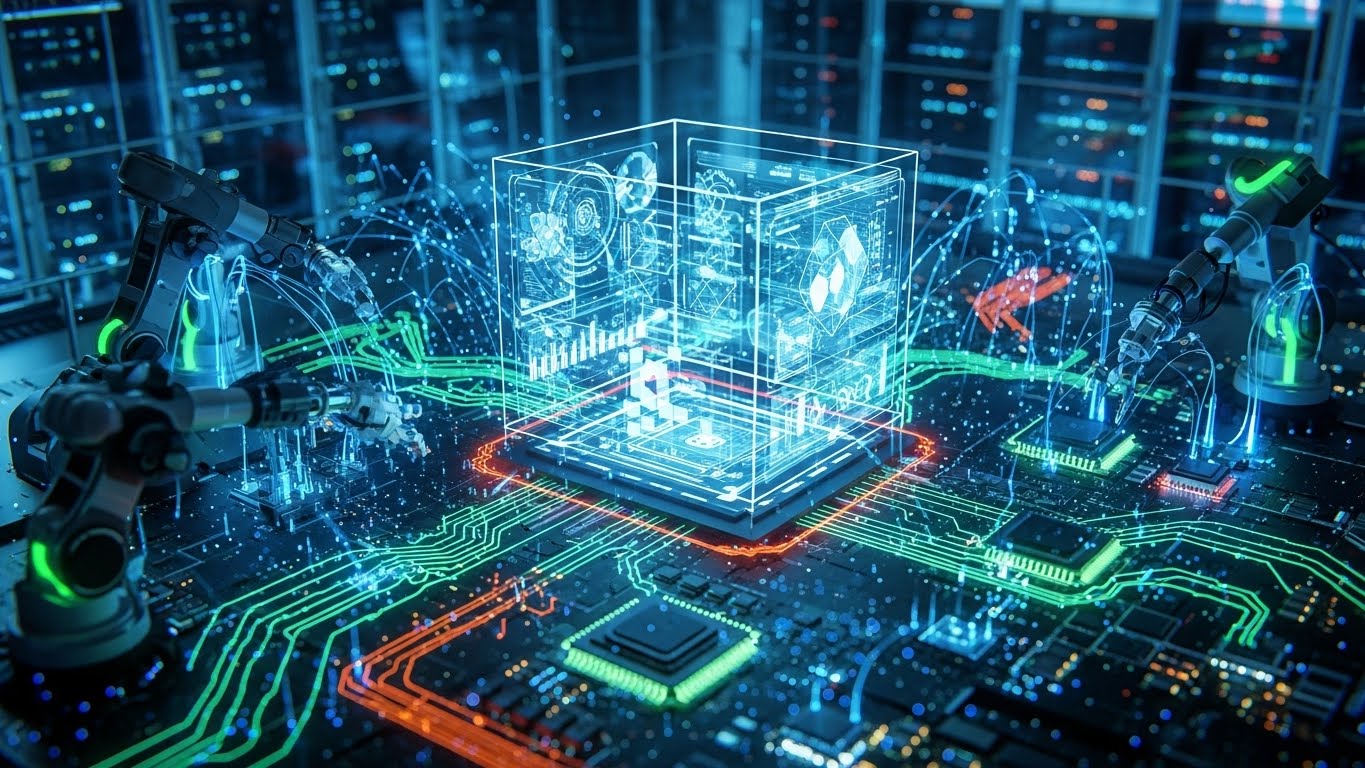

Technology has always been a driving force behind human progress, shaping the way we live, work, and connect with the world. From the invention of the wheel to the rise of the internet, each technological leap has brought about dramatic changes in society. Today, we find ourselves on the cusp of yet another era of transformation, where emerging technologies like artificial intelligence (AI), blockchain, and quantum computing are poised to reshape every aspect of our lives. In this blog post, we’ll dive into the cutting-edge technologies that are set to define the future, and explore the ways they will impact everything from healthcare to entertainment.
The Rise of Artificial Intelligence: More Than Just Smart Machines
Artificial intelligence is arguably the most talked-about technological advancement of our time. Once confined to science fiction, AI has made its way into virtually every industry, from healthcare to finance to entertainment. At its core, AI aims to simulate human intelligence, enabling machines to learn from data, adapt to new information, and make decisions without explicit programming.
In the coming years, we can expect AI to become even more integrated into our daily lives. For example, AI-powered assistants, such as voice-activated devices and smart home systems, will become more intuitive and responsive. In healthcare, AI will help doctors diagnose diseases more accurately, personalize treatment plans, and even predict potential health risks based on genetic data. Autonomous vehicles, powered by AI, could soon be a common sight on our roads, transforming the way we travel.
But AI’s potential extends far beyond these applications. In fields like education, customer service, and creative industries, AI will assist in everything from personalized learning experiences to content creation, making processes more efficient and accessible. However, the rapid rise of AI also raises ethical questions about privacy, job displacement, and the control of powerful algorithms. As we embrace AI’s potential, we must also navigate the challenges it presents.
Blockchain: Beyond Cryptocurrency
When most people hear the term “blockchain,” they likely think of cryptocurrencies like Bitcoin or Ethereum. While blockchain technology is the backbone of these digital currencies, its applications extend far beyond financial transactions. At its core, blockchain is a decentralized, transparent ledger system that allows data to be securely stored and shared across multiple devices without the need for a central authority.
One of the most promising applications of blockchain lies in supply chain management. By creating transparent, immutable records of every transaction, blockchain can help businesses track products from production to delivery, ensuring authenticity and reducing fraud. In healthcare, blockchain can securely store patient records, allowing for seamless sharing of information between healthcare providers while maintaining patient privacy.
The financial sector is also undergoing a transformation thanks to blockchain. Traditional banking systems are often slow, expensive, and prone to errors. Blockchain-based solutions, such as decentralized finance (DeFi) platforms, promise to streamline financial transactions, reduce costs, and provide greater financial inclusion for underserved populations.
Beyond these applications, blockchain is also being explored for its potential to revolutionize industries like real estate, voting systems, and intellectual property management. The key challenge with blockchain adoption is scaling its use in real-world applications, as the technology is still in its early stages. Nevertheless, blockchain has the potential to disrupt industries and redefine how we handle data, security, and transactions.
Quantum Computing: The Next Frontier in Problem Solving
Quantum computing is often referred to as the next frontier in technological advancement, and for good reason. Unlike classical computers, which process information in binary (0s and 1s), quantum computers leverage the principles of quantum mechanics to perform calculations using quantum bits, or “qubits.” This allows quantum computers to solve complex problems at speeds that are orders of magnitude faster than the most powerful supercomputers available today.
The potential applications for quantum computing are immense. In fields like cryptography, quantum computers could crack encryption algorithms that are currently considered unbreakable. In medicine, they could simulate the behavior of molecules, potentially revolutionizing drug discovery and personalized treatments. In logistics and supply chain management, quantum computing could optimize routes and inventory management in real-time, saving businesses billions of dollars.
While quantum computing holds enormous promise, the technology is still in its infancy. Researchers are working to overcome significant technical challenges, such as maintaining the stability of qubits and scaling quantum systems for practical use. However, major players in tech, including Google, IBM, and Microsoft, are pouring resources into quantum computing research, and we can expect breakthroughs in the coming years.
The Internet of Things (IoT): Connecting Our World
The Internet of Things (IoT) refers to the network of physical devices—ranging from home appliances to wearables—that are connected to the internet and can communicate with each other. This network of smart devices is already beginning to change the way we interact with technology on a daily basis, and its influence is only expected to grow.
Smart homes are one of the most visible examples of IoT in action. Devices like smart thermostats, security cameras, and voice assistants are becoming more advanced, allowing homeowners to control and monitor their homes remotely. IoT-enabled healthcare devices, such as wearable fitness trackers and remote patient monitoring tools, are providing individuals with more personalized and real-time health data, while also reducing the burden on healthcare systems.
On a larger scale, IoT is transforming industries like manufacturing, agriculture, and transportation. In smart factories, sensors can monitor machinery and optimize production processes, reducing downtime and improving efficiency. In agriculture, IoT devices can monitor soil moisture and weather patterns, enabling farmers to make more informed decisions about irrigation and crop management. And in transportation, IoT-enabled vehicles and infrastructure are paving the way for smarter, more efficient traffic management systems.
As the number of connected devices continues to rise, the key challenge for IoT will be ensuring security and data privacy. With more devices collecting and sharing personal data, safeguarding that information will be critical.
5G: The Backbone of Tomorrow’s Digital Ecosystem
The rollout of 5G networks is one of the most anticipated technological advancements in recent years. 5G, the fifth generation of wireless technology, promises to deliver faster speeds, lower latency, and more reliable connections than ever before. This will enable a host of new possibilities, from ultra-fast internet for consumers to the seamless connectivity required for emerging technologies like autonomous vehicles, IoT devices, and augmented reality.
One of the most exciting applications of 5G will be in the healthcare sector. With its low latency and high bandwidth, 5G will allow for real-time remote surgeries, where surgeons can operate on patients from miles away using robotic tools. In education, 5G could enable virtual classrooms that are more interactive and immersive, breaking down barriers to learning in underserved areas.
However, the widespread adoption of 5G also raises concerns about infrastructure, cost, and potential health effects. Building the necessary infrastructure for 5G will require significant investment, and ensuring that its benefits are equally distributed across rural and urban areas will be a challenge. Nonetheless, 5G is set to be a key enabler of the next generation of digital experiences.
Conclusion: A Tech-Driven Future
The technologies we’ve explored here represent just the tip of the iceberg in terms of what’s coming next. As AI, blockchain, quantum computing, IoT, and 5G continue to evolve, they will unlock new possibilities that we can barely imagine today. The pace of innovation is accelerating, and we are only beginning to scratch the surface of what these technologies can do.
While the future of tech holds incredible promise, it also brings with it significant challenges. Ethical considerations, security concerns, and the need for equitable access to technology will require careful thought and collaboration. As we move forward into this brave new world of tech-driven innovation, the most important task will be to ensure that these technologies are used responsibly and for the greater good of humanity. The next wave of innovation is upon us—let’s embrace it, with both excitement and caution, as we navigate the future.